
Military Dog Standards vs Pet Dogs: Where Do E-Collars Fit?
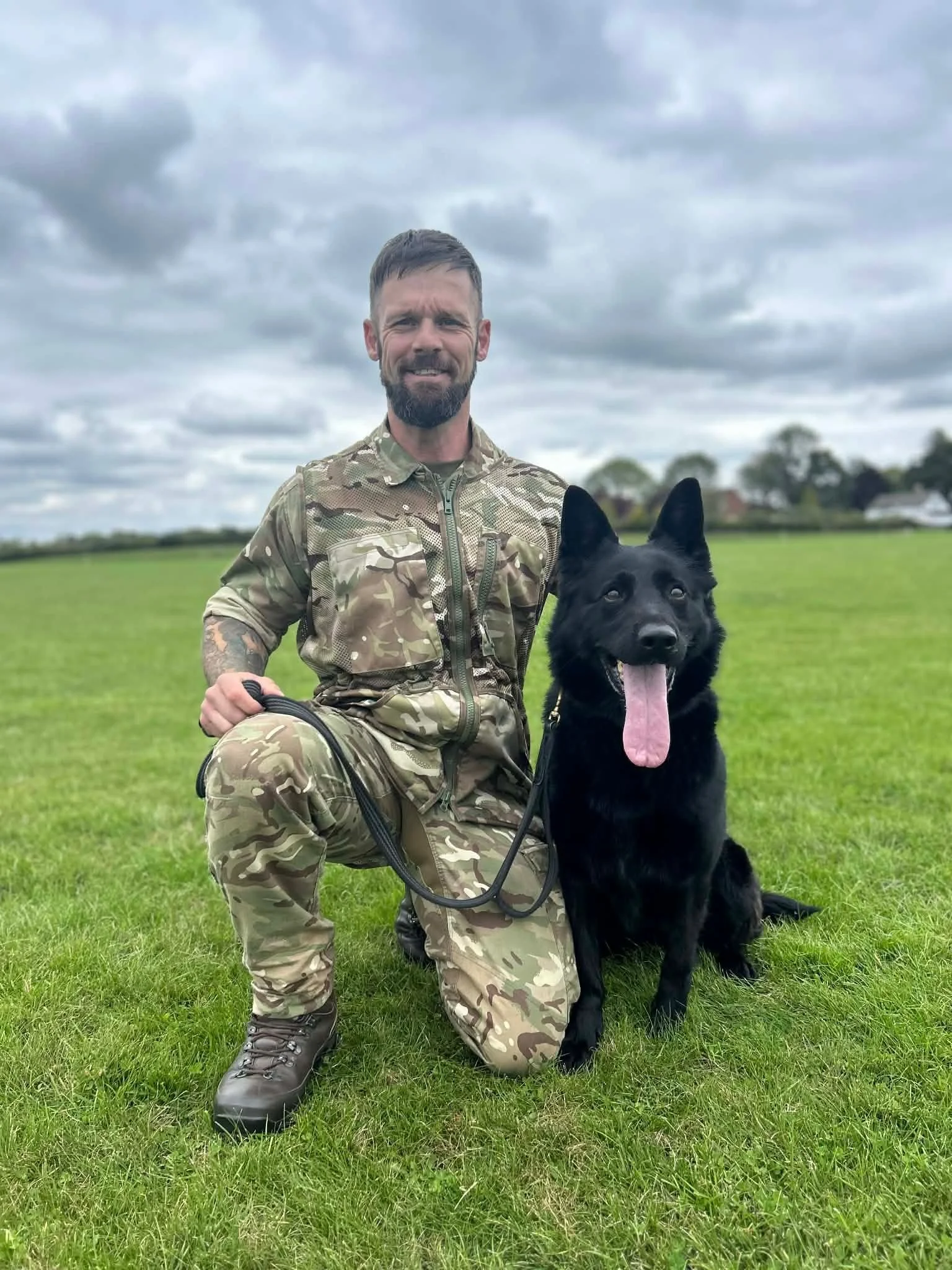
As a military dog handler, I work with dogs that are required to perform to extremely high standards. These dogs operate in environments where reliability is not optional.
What often strikes me is how closely many of those same standards mirror what responsible dog ownership should look like in everyday life.
The difference is not the expectation.
The difference is what happens when those expectations are not met.
In the military, failure can have serious operational consequences. In civilian life the stakes may look different, but the outcomes can still be significant — dogs chasing livestock, running into roads, or losing their off lead freedom entirely.
The Basics Every Dog Should Know
Military dogs are expected to respond reliably to a core set of commands: sit, down, heel, recall, leave it, and no.
These are not optional behaviours. They are fundamental requirements that allow the dog and handler to operate safely and effectively together.
In reality, these are exactly the same foundations every pet dog should have. A dog that understands and responds consistently to these commands is safer to live with and far easier to manage in real world environments.
At its heart, good training is simply about clear communication between dog and handler.
Off Lead Reliability Matters
Military dogs must be able to perform both on lead and off lead with complete reliability. A handler needs to know that when a command is given, the dog will respond immediately, even at distance.
Pet dogs may not be operating in tactical environments, but the principle remains the same.
If a dog cannot be trusted off lead, its world becomes smaller. Owners keep the dog on a lead because they cannot rely on recall or impulse control around distractions.
Reliable training gives dogs something incredibly valuable: freedom.
Livestock Chasing Is Not a Minor Issue
One of the most important expectations placed on military dogs is neutrality around livestock and other domestic animals. They simply cannot show interest.
This standard is just as important for pet dogs, particularly in rural areas across the UK where livestock worrying continues to be a serious issue.
When dogs chase livestock, the consequences can be severe. Animals are injured or killed, farmers suffer financial losses, and in many cases dogs are legally shot to protect livestock.
For dog owners, the emotional and legal consequences can be devastating.
From a training perspective, chasing behaviour is also one of the most difficult issues to resolve once it becomes established. High prey drive, excitement, and distance from the handler make it extremely challenging to interrupt in the moment.
Where the E-Collar Comes In
Within some military units, particularly special operations environments, e-collars are used as part of the training toolkit.
The reason is straightforward. These dogs operate in situations where reliability cannot be left to chance.
An e-collar allows the handler to communicate with the dog at distance and reinforce commands when the dog is beyond physical reach.
That same challenge exists in everyday dog training. When a dog is fifty or a hundred metres away and focused on livestock or wildlife, the handler has very few reliable ways to interrupt that behaviour.
Some organisations advocate removing e-collars entirely and relying exclusively on reward based training. Positive reinforcement absolutely has an important place in dog training, but anyone who regularly works with high drive dogs knows that certain behaviours are extremely difficult to control using food rewards alone.
This is something professional trainers encounter every day.
The Real World Consequences
When effective tools are removed from the conversation entirely, the outcomes are often worse for dogs and owners alike.
Dogs lose their off lead freedom because owners cannot trust them.
Livestock attacks continue to happen.
Some dogs are rehomed because chasing behaviour becomes unmanageable.
And in the worst cases, dogs are shot while worrying livestock.
These are not hypothetical situations. They are real outcomes that occur every year.
Responsible Use and Education
None of this suggests that e-collars should be used casually or without proper understanding.
Like any training tool, they require knowledge, education, and responsible handling.
This is precisely why organisations such as the National Association for Professional E-Collar Training (NAPET) advocate for clear standards, professional education, and responsible use.
The goal is not unrestricted use. The goal is informed, ethical use by people who understand how the tool works and how to apply it correctly.
The Bottom Line
There is a reason certain military units continue to use e-collars in training.
When used correctly, they provide a way to communicate clearly with a dog at distance and reinforce critical behaviours when reliability truly matters.
For many dogs, that reliability is what allows them to live safely while enjoying far greater freedom.
Good training is not about ideology.
It is about responsibility, clarity, and giving dogs the skills they need to safely navigate the world around them.
Author Bio
Mark brings professional experience from operational working environments and currently serves as a part-time military dog handler specialising in the preparation of working dogs for deployment. He is also an experienced companion dog trainer, supporting responsible ownership alongside his operational work.
About NAPET
The National Association for Professional E-Collar Training (NAPET) is a UK organisation working to establish clear competency standards, professional accountability, and structured regulation for the responsible use of e-collars in dog training. NAPET advocates for evidence-informed policy, professional oversight, and practical welfare solutions that reflect the realities faced by trainers, owners, and dogs in the real world.
