
When Is Lambing Season? Keeping Dogs Safe Around Sheep

When is lambing season?
Updated 16 October 2026. Original publication date retained.
Lambing season does not have one fixed start or finish across the UK. Many flocks lamb in spring, while some lamb earlier or later depending on the farm and its production system. Sheep may be pregnant or have young lambs outside the period you expect. Plan around the animals and signs you actually encounter, not the calendar alone.
For dog owners, the practical priority is preventing chasing and disturbance. Keep your dog on a lead around livestock, follow local signs, leave gates as you find them and choose another route where safe control or separation is doubtful. Good recall is useful, but it should not be treated as permission to test a dog near a flock.
A quick check before your walk
Check the route and any local livestock notices. Have an alternative route.
Check the lead, harness or collar and your ability to maintain control.
Watch for sheep before your dog reaches them. Create distance early.
Do not enter a field to practise training around livestock without the appropriate permission and safeguards.
If livestock or horses threaten you, the Countryside Code advises letting your dog off the lead rather than risking injury trying to protect it. This is an emergency safety exception, not everyday advice to let dogs loose near stock.
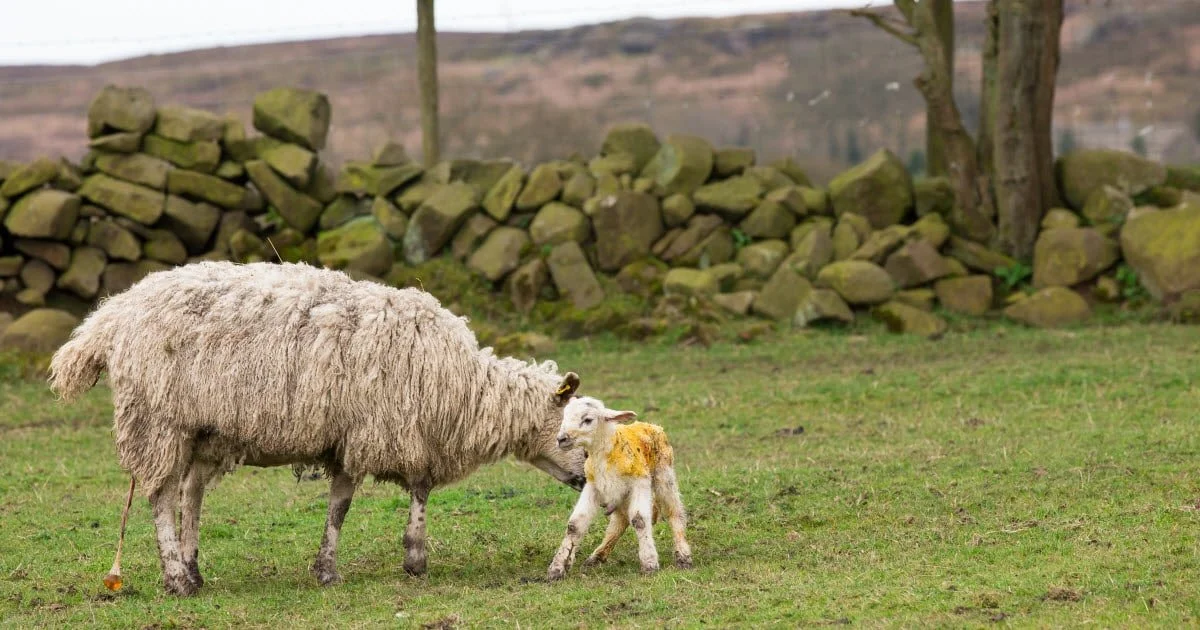
Disturbance can harm sheep without contact
Dog induced chasing and stress can contribute to miscarriage, injury, separation of ewes and lambs and death. That does not mean that every bark or moment of fixation inevitably causes an abortion, or that stress can be identified as the cause of a particular pregnancy loss without investigation. Farmers should seek veterinary advice for affected animals.
The National Sheep Association's sheep worrying guidance explains why owners must prevent chasing and disturbance, not simply avoid a bite.
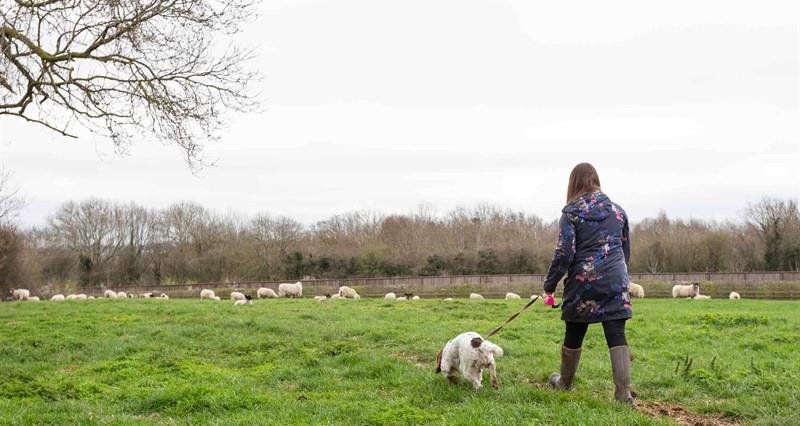
Use a lead and give livestock space
A lead is an important safeguard. It should not be dismissed as inadequate or replaced with reliance on a training tool. It prevents pursuit when used with suitable equipment, a capable handler and appropriate distance.
A dog can still bark or lunge while restrained. If it becomes fixated, excited or distressed, move away, use another route and avoid prolonged exposure to the flock. Do not deliberately bring the dog close to test its control.
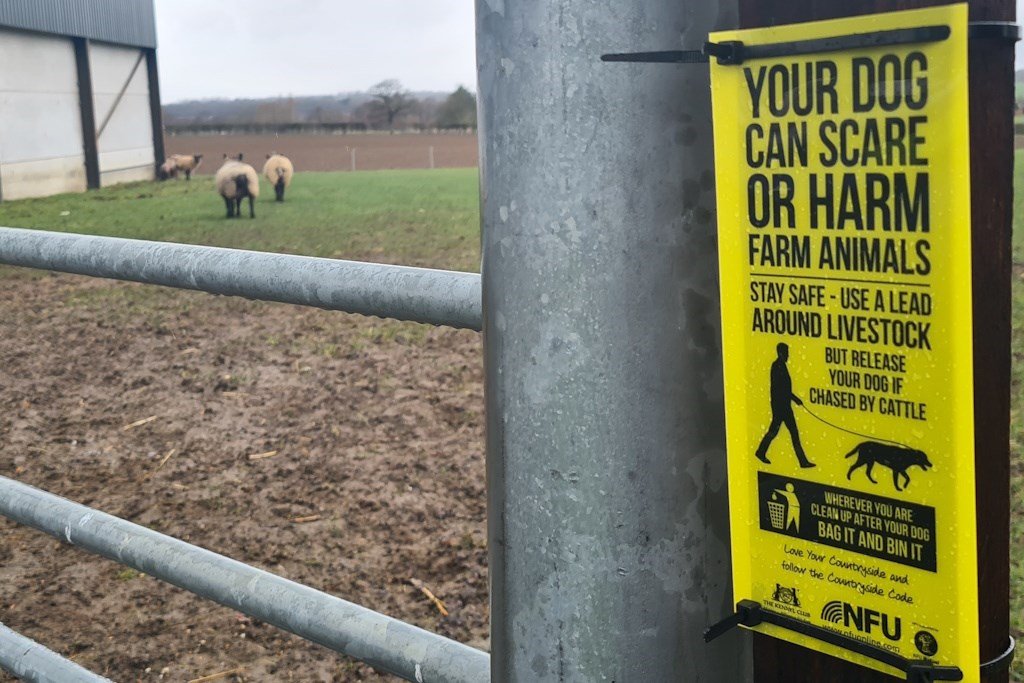
Follow signage, keep gates as found and avoid entering areas where your dog cannot be safely managed. Secure gardens and boundaries also matter because livestock incidents can involve dogs that have escaped.
The Countryside Code advises leads around livestock, with the important safety exception of releasing a dog if livestock or horses threaten you. Local legal requirements differ across the UK; read our dogs and livestock guide.
Assess the individual dog and owner
Chasing may involve predatory behaviour, excitement, learning history and opportunity. It should not be described as almost always just a recall or impulse control failure. A friendly dog can still injure livestock.
Professional assessment should consider health, behaviour, environment, handling and the owner's ability to keep others safe. Work on suitable training at a safe distance, and use management that prevents harm while progress is assessed.
No method guarantees recall around moving livestock. A successful training session, a collar or an owner's confidence is not proof that off-lead exposure is safe.
Where electronic collars fit in the debate
NAPET advocates proportionate regulation, professional education and safeguards for electronic collar use where lawful. This is its policy position, not a demonstration that electronic collars are necessary for every livestock case or provide reliable emergency control.
Claims of immediate interruption, guaranteed recall or prevented deaths require evidence for the actual outcome. Competent use does not eliminate welfare risks. Alternatives, risks, the legal position and stopping criteria must be considered, and appropriate physical safeguards must remain in place.
Whether a proposed restriction would increase or reduce harm is a policy question requiring evidence. It should not be presented as a proven increase in risk simply because NAPET opposes a blanket ban.

NAPET's focus: ethics, standards and responsibility
NAPET does not advocate casual or reckless use of equipment. Its developing standards emphasise ethical decision making, welfare, education, case suitability and professional accountability.
Prevention comes first: keep dogs on leads around livestock, give animals space, secure boundaries, seek appropriate help and do not allow chasing to be rehearsed. Respect livestock and farmland throughout the year, not only during lambing.
If an incident occurs, regain control without creating further danger, report it and tell the farmer so affected animals can be found and treated. Read the practical guidance, legal qualifications and original sources.
Frequently asked questions
Is lambing season always in spring?
No. Timing varies between farms and flocks. Keep dogs controlled around sheep throughout the year.
Does sheep worrying mean a dog has bitten a sheep?
No. Chasing or disturbing sheep can cause harm without a bite. Do not wait for physical contact before intervening safely.
Can I rely on recall instead of a lead?
Do not use livestock as a test of recall. Use physical management, distance and appropriate routes. No training method or device guarantees safety.
What if my dog has chased sheep before?
Prevent further opportunities and seek individual professional assessment. Training does not remove your responsibility for secure management.
Explore the NAPET Learning Centre for related guidance.
