
Lambing Season, Sheep Worrying, and Why Real Control Matters

A NAPET perspective on welfare, responsibility, and prevention
We are fast approaching lambing season across the UK. For sheep farmers, this is one of the most critical and vulnerable periods of the year. Ewes are heavily pregnant, energy demands are high, and tolerance to stress is significantly reduced. What happens during these weeks can determine not only lamb survival, but the long-term welfare of the ewe herself.
This context matters, because sheep worrying is not a minor issue, and it is not limited to physical attacks.
Stress Alone Can Cause Abortion in Sheep
A crucial fact that is often misunderstood outside agriculture is this:
Sheep can abort the contents of the womb purely as a result of stress.
A dog does not need to bite, injure, or even touch a sheep to cause serious harm. Chasing, repeated approach, barking, or intense fixation can trigger acute stress responses that lead to:
miscarriage or abortion
premature labour
mismothering after birth
weakened or non-viable lambs
In many cases, the damage is not immediately visible. Farmers may only discover the loss hours or days later, long after the dog and owner have left the area.
This is why sheep worrying is defined not only by attack, but by chase and harassment. From a welfare standpoint, the outcome can be just as devastating.
Lambing Season Raises the Stakes
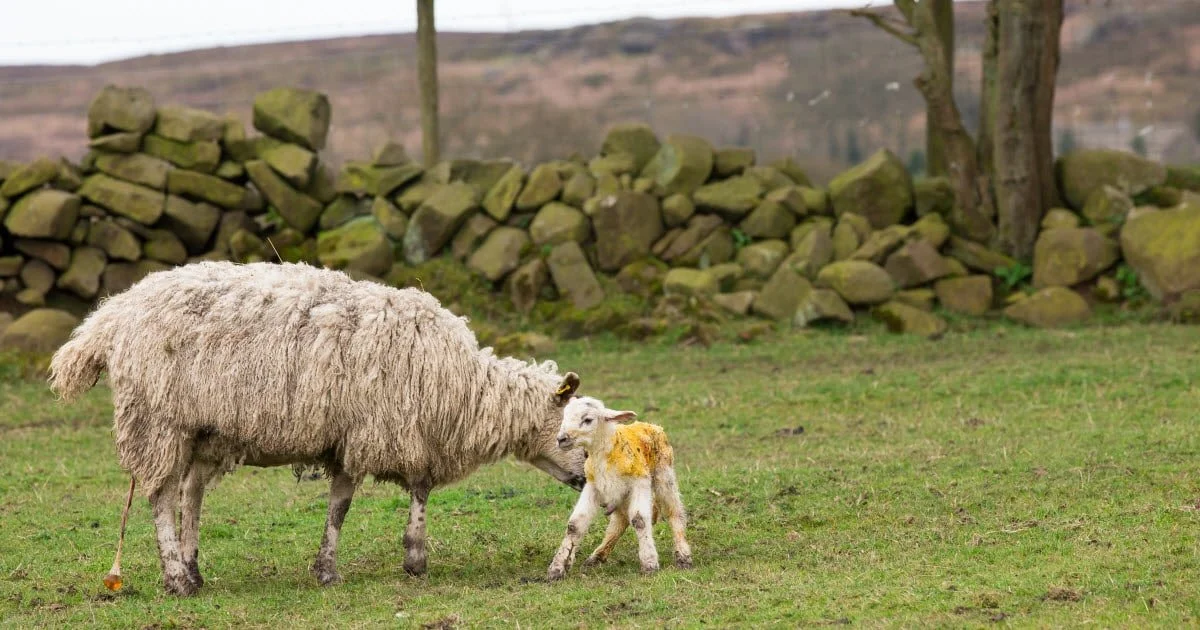
During lambing:
ewes are heavier, slower, and less mobile
stress hormones have a far greater physiological impact
recovery from stress is reduced
the risk of abortion or birth complications increases sharply
A single uncontrolled dog can affect multiple sheep in minutes. This is not alarmism, it is routine reality for farmers every spring.
And it is precisely why prevention matters more than reaction.
Why “Dogs on Leads” Is Not a Complete Safeguard
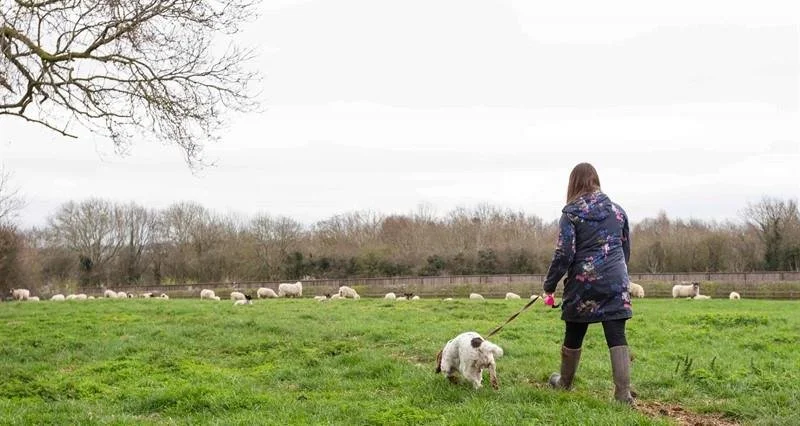
Public messaging around sheep worrying often focuses on one instruction: keep dogs on leads. While this advice is well-intentioned and appropriate in many situations, it is not a complete safeguard against sheep worrying, particularly during lambing season.
Sheep can suffer severe stress responses without physical contact.
A dog on a lead can still:
bark repeatedly at sheep
lunge or fixate intensely
pull toward livestock, escalating stress
trigger flight responses in pregnant ewes
cause prolonged agitation in confined flocks
From a welfare perspective, stress alone is enough to cause abortion, premature labour, or mismothering. A lead may prevent pursuit, but it does not automatically prevent stress.
This is especially relevant during lambing season, when ewes are physiologically vulnerable and far less resilient to disturbance.
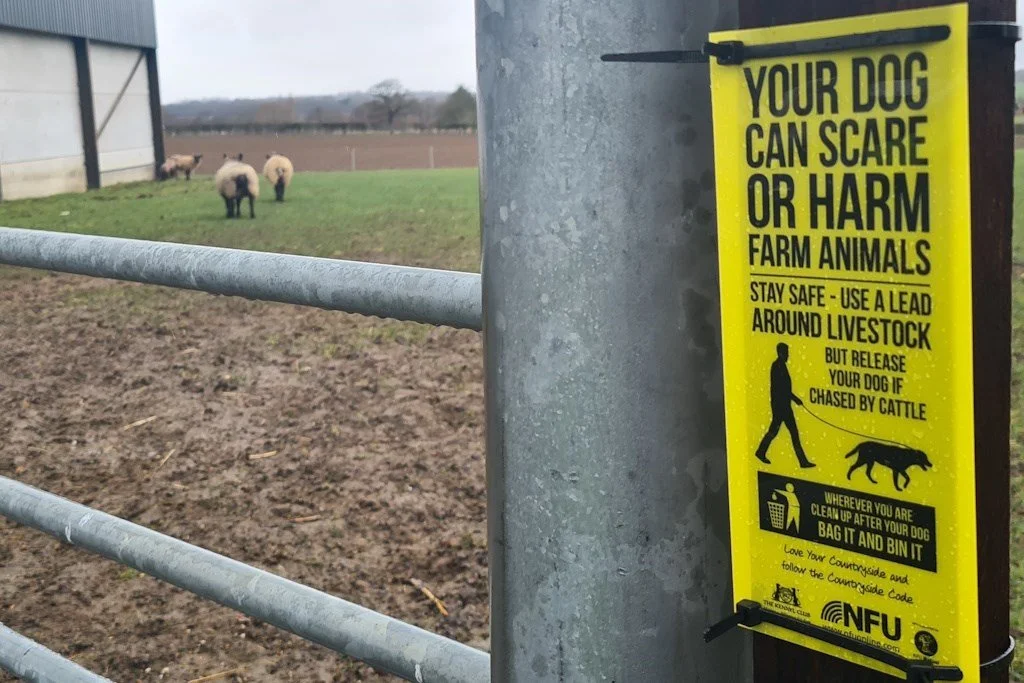
Control Is About Behaviour, Not Just Equipment
This is where the conversation must be honest.
A lead is a management tool, not a behavioural solution. It restricts movement, but it does not change:
prey drive
arousal levels
fixation
learned chasing behaviour
If a dog is barking, lunging, or repeatedly attempting to engage livestock, the welfare impact on sheep may still be significant, even if the dog never reaches them.
True prevention requires behavioural control, not just physical restraint.
Sheep Worrying Is a Control Failure, Not a “Bad Dog”
Dogs do not chase or fixate on sheep because they are aggressive or malicious. They do so because:
chasing is self-reinforcing
prey drive is natural
recall fails under high arousal
owners overestimate real-world control
From a training perspective, sheep worrying is almost always a recall and impulse-control failure, not a temperament issue.
That distinction matters, because it means sheep worrying is preventable with the right standards of training, education, and responsibility.
Why This Matters to NAPET
This is where NAPET comes in.
NAPET exists because real-world dog training does not happen in sterile environments. It happens:
around livestock
in open countryside
at distance
when arousal is high and consequences are severe
During lambing season, the margin for error disappears.
NAPET’s position is clear:
Reliable control at distance is a welfare issue, not a lifestyle choice.
Where E-Collars Fit Into the Reality of Lambing Season
Electronic training collars are often discussed emotionally, but in the context of sheep worrying the question is practical:
How do we stop a dog at distance, under high arousal, before damage is done?
Food, toys, and verbal cues frequently fail once a dog is locked onto livestock. Long lines are not always practical or safe in open terrain. Physical intervention is often impossible.
Used ethically and competently, e-collars allow for:
immediate interruption of fixation or chase behaviour
clear association between action and consequence
reliable recall where failure carries serious risk
prevention rather than learning after harm has occurred
This is not about punishment. It is about timing, clarity, and responsibility in moments where mistakes cost lives.
Why Blanket Bans Ignore Lambing Reality
Calls for blanket bans on e-collars often come from people far removed from agricultural and countryside realities. What these arguments routinely ignore is that:
sheep cannot be “retrained” after an incident
unborn lambs cannot be recovered
farmers bear the emotional and financial cost
dogs involved may be seized, destroyed, or permanently restricted
Removing effective control tools without replacing them with enforceable standards does not improve welfare, it increases risk.
NAPET’s Focus: Ethics, Standards, Responsibility

NAPET does not advocate reckless or casual use of e-collars. Quite the opposite.
We exist to ensure:
ethical decision-making that prioritises animal welfare
professional standards that define competence
responsible use based on education, case suitability, and accountability
During lambing season, these principles are not theoretical. They are measured in:
lambs carried to term
sheep not chased or stressed
dogs safely recalled
owners protected from legal consequences
Prevention Is Welfare
Sheep worrying is one of the clearest examples of why dog training cannot be governed by ideology alone. Welfare is not protected by intentions, it is protected by outcomes.
As lambing season approaches, the message is simple:
keep dogs under genuine control
understand that stress alone can kill
respect livestock and farmland
use appropriate training tools responsibly
prioritise prevention over apology
NAPET’s role is to ensure that professional standards exist to make those outcomes possible, before harm occurs, not after.
Because when it comes to sheep worrying during lambing season, the cost of failure is not theoretical.
It is measured in lost lives.
